
English| EUR
Suggested for you
More currencies
Choose a language
Gansbaai sits at the mouth of Walker Bay, where the cold Atlantic pushes against Indian Ocean water and Dyer Island shelters a colony of some 60,000 Cape fur seals. That collision governs how clear the water is, how cold it feels in the cage, and how predators behave. This gansbaai shark cage diving season guide sets out what changes through the year and what does not.
Quick answer
Boats run year-round from Kleinbaai, with departures scheduled inside daily 07:00–18:00 operating hours and an arrival window of 07:00–08:00. Sea temperature ranges roughly from the mid-teens in summer upwellings to the high teens in winter Celsius. Winter and spring generally bring calmer mornings and steadier visibility; strong southeasterly wind, not the calendar, is the main reason a trip is postponed.
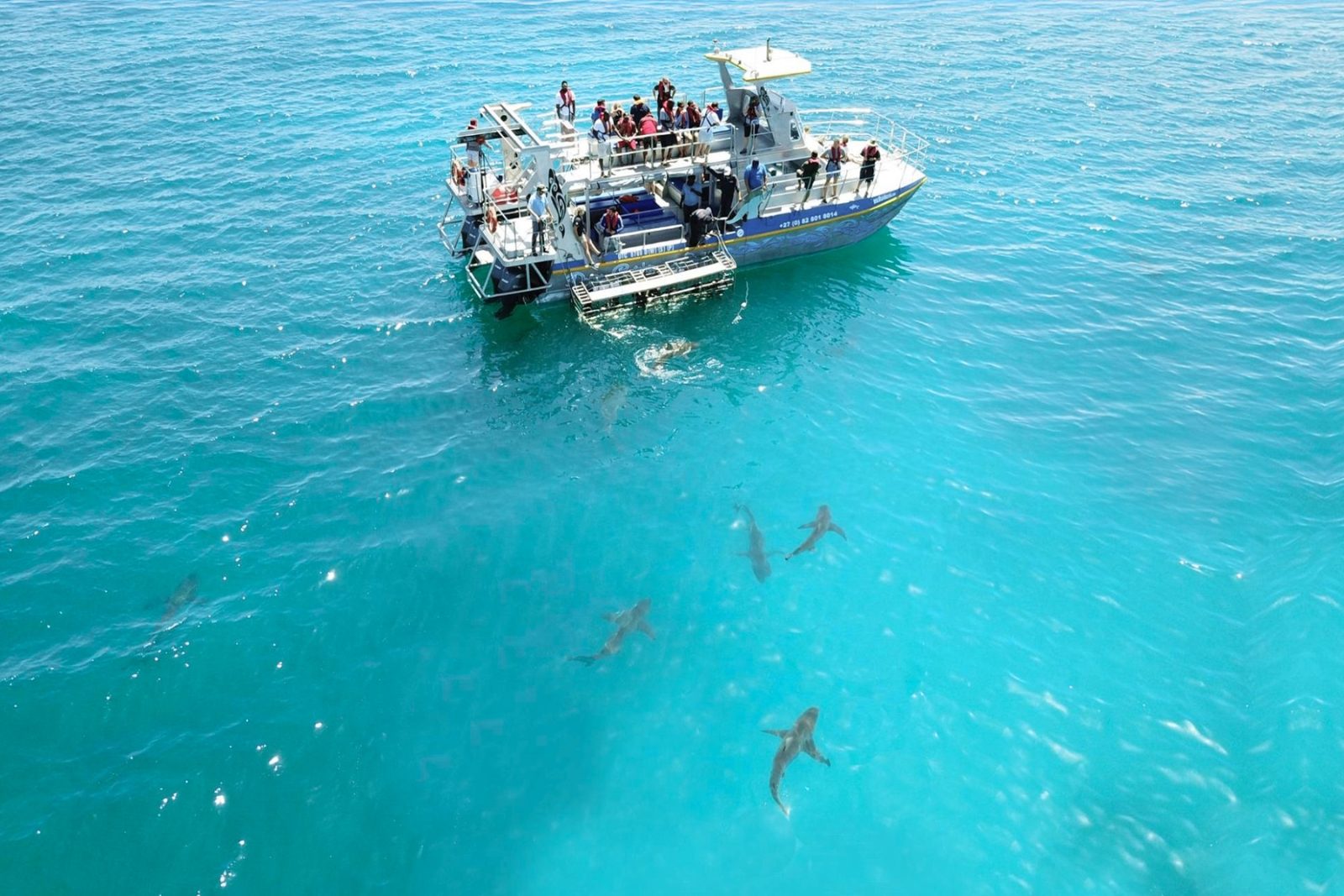
The seals arrived before the tourists. Geyser Rock, a low granite outcrop beside Dyer Island, holds one of the densest Cape fur seal colonies on the South African coast, and the narrow channel between the two — Shark Alley — became famous because predators learned to patrol it. Everything a visitor experiences on the water is downstream of that ecology. Cage diving vessels leave from Kleinbaai harbour, a few minutes from the launch point, and reach the anchoring grounds off Dyer Island in roughly fifteen minutes. Water clarity in Walker Bay is driven by wind rather than month. A sustained southeasterly stirs sand off the shallow reef and drops visibility to a metre or two; two or three quiet days let it recover to five metres or more. Southeasterlies dominate the South African summer, from about November to February, which is why many operators describe the autumn-to-spring stretch as the more reliable half of the gansbaai shark cage diving season. Temperature moves in the opposite direction to intuition. Summer upwelling drags cold Atlantic water into the bay, pushing readings into the mid-teens Celsius, while winter water is often marginally warmer and less variable. Wetsuits are supplied on all vessels, so the practical consequence is surface comfort between drops rather than time in the cage. Shark activity has shifted since the mid-2010s. Great white sightings off Gansbaai declined sharply from around 2017, coinciding with the arrival of a pair of orcas known locally as Port and Starboard, and bronze whaler sharks — copper sharks — became the species most commonly seen at the cage. Great whites still appear, in ones and twos rather than reliable numbers, and boats also encounter southern right whales between roughly June and November and Brydes whales on the transit out. A shark cage diving trip in Gansbaai is therefore best understood as a marine wildlife excursion in which the headline species is possible, not guaranteed. The honest planning conclusion is modest. No month guarantees a great white, and no month rules one out, so travellers should read the gansbaai shark cage diving season as a question of sea state rather than species. Build slack into the itinerary: two or three available mornings in Gansbaai rather than one, so a wind-postponed launch can be rescheduled without abandoning the plan. Operators confirm launches the evening before, and conditions offshore can differ from the calm harbour at 9 Kus Drive.
“No month in Gansbaai guarantees a great white, and no month rules one out — the variable worth planning around is wind.”
Gansbaai offers year-round shark cage diving, with the months of April through October often providing the highest shark activity and superior water clarity. Winter and spring months generally yield better visibility, though shark presence remains consistent throughout the calendar year.
12°C–16°C; cooler and often clearer water.
These months typically offer the best underwater visibility and consistent shark sightings.
15°C–20°C; warmer with potential for wind.
Water temperature increases, though visibility can fluctuate due to plankton blooms and coastal winds.
—
Early arrival ensures optimal sea conditions and calmer waters before afternoon wind shifts.
Verdict: The best opportunity for visibility and activity is from April to October, specifically on weekday mornings.
Shark cage diving operations in Gansbaai maintain a consistent schedule throughout the season to accommodate daily boat launches. Visitors are advised to plan for a full-day experience based on the following operating hours.
Preparation for a Gansbaai cage dive comes down to three things: securing your place in advance, packing for cold Atlantic water, and carrying the right paperwork on the day.
The launch site for shark cage diving is located at 9 Kus Drive, Kleinbaai, Gansbaai, 7220, South Africa. Visitors arriving by road typically travel via the R43, which connects directly to the coastal town of Gansbaai.
R43 to Gansbaai, then follow local signs to Kleinbaai
Private transfer from Cape Town International Airport
The best arrival window is 07:00–08:00. Early morning arrival is essential for check-in, safety briefings, and tidal scheduling.
Everything you need to know about gansbaai shark cage diving season
The peak of the gansbaai shark cage diving season typically spans from April to October when activity is consistently high. While sightings occur year-round, these months often provide the most reliable encounters with apex predators.
Water temperatures fluctuate between 12°C and 16°C throughout the year, regardless of the gansbaai shark cage diving season. Wetsuits are provided to ensure guest comfort during your time in the water.
All tours are subject to sea conditions, as safety remains the priority regardless of the chosen gansbaai shark cage diving season. High winds or swells may necessitate rescheduling to ensure a safe marine experience.
The standard price is 2,450 ZAR per adult for a single tour. This fee covers the boat trip, safety briefing, and equipment rental for the excursion.
Yes, children are welcome to participate in tours, provided they are accompanied by an adult. Please ensure you check individual operator requirements regarding age and swimming ability before booking your spot.
Guests should arrive between 07:00 and 08:00 for mandatory safety briefings and final tidal checks. Early morning arrival is essential for ensuring your vessel departs on schedule.
Visibility is influenced by environmental factors such as currents and swell, rather than just the gansbaai shark cage diving season. Operators monitor sea conditions daily to find the clearest water for optimal viewing of marine life.